- Didihood
- Posts
- Didihood ~ Issue 91

Happy December, Didis! It was another great year for us building this community and we’re grateful for all of your support! We’re most active on Instagram, so give us a follow there to see what we’re up to!
Wishing you all a happy holiday season and we’ll see you in 2026!
Meet the Didi
This month, we’re chatting with director Eisha Marjara about her most recent film, Calorie. Eisha Marjara gained recognition with her NFB docudrama Desperately Seeking Helen, winning the Critic’s Choice Award at Locarno and the Jury Prize at München. She later wrote and directed The Tourist, House for Sale, and the award-winning feature Venus. Her NFB short documentary Am I the Skinniest Person You’ve Ever Seen? won the Betty Youson Award for Best Canadian Short at the 2024 Hot Docs Festival, as well as Best Documentary at Frontdoc, and at It’s All True FF. Calorie is her most recent feature to date, inspired by real events.

Eisha Marjara
Tell us about your journey into becoming a filmmaker, is it something you’ve always wanted to do?
I took an elective in filmmaking in CEGEP while studying science and the film teacher saw talent in me, but I wasn't ready to take that step. I enrolled in a professional photography program at Dawson College and my thesis project was a 17-minute video which ended up screening at the Montreal International Film Festival. That confirmed that I wanted to be a filmmaker. I went into communications studies program at Concordia University and by the end of it, I was making my first professional film.
What has your experience been as a South Asian woman navigating this space? Have you faced any challenges?
At the basic level the challenges for me were no different than anyone who decides to become a filmmaker. Learning the craft, finding my vision and voice, navigating the industry and funding resources. But as an anglophone WOC in Quebec, who has been influenced and shaped by many cultures and languages, creating a cinema that reflected those diverse aesthetic influences that could be integrated into the mainstream took a long time. Quebec has a strong white francophone identity and produces exceptional films that reflect that identity, narratively and aesthetically. Cinema is a language and mine had to cross cultural norms to be understood and seen as a valid expression of Quebec identity that embodied a trans-cultural experience. I dislike the term "hyphenated" as It seems to fragment and "other" people (often women of colour) and box them into an identity that steers prejudices and expectations of what their filmmaking ought to look like and be about. I hate being called a “female filmmaker.” It ghettoizes female and minority artists and becomes another form of exclusion. I grew up watching campy Bollywood dance sequences alongside listening to Céline Dion and Pauline Julien and watching American sitcoms while raised with feminist ideas. Funnelling all those aspects of myself in a cohesive way in film, was challenging. It was challenging because it rubs against the status quo but in the end, originality, authenticity, and good filmmaking gets noticed and gets made. I believe it first comes from good writing and original storytelling. That is the key and the glue that unifies and bridges differences. But it comes from a confidence that you as a filmmaker and your filmmaking is worthy and deserves to belong.
Your latest film, Calorie, is inspired by true events and navigates the topics of grief and guilt among mother and daughters, was it cathartic for you to tell your story this way?
Art is cathartic. I assume that's true for any artist about their work. For filmmaking perhaps more so because film is expensive, takes a long time, demands commitment and sacrifice. You face rejections, set backs, conflicts and that makes for an emotional journey. Calorie was no different. But Calorie is not a personal film. I had already processed a lot of the difficult emotions in my first film Desperately Seeking Helen and in my photography work, so by the time it came to working on Calorie, I could approach the subject objectively and appreciate making the film. The catharsis came from the decade of struggle trying to get the film made with my producer Joe Balass.

This year marks 40 years since the Air India tragedy, what do you hope people take away from watching this film and the narrative surrounding that history moving forward?
Most Canadians don't even know about the tragedy. Some who watched the film expressed shock, even shame for not having had a clue about Canada's worst terrorist attack, one that took more Canadian lives than in 9/11. In that sense it accomplishes conveying that history. But Calorie is not a historical film, nor is it a crime drama. It's a family drama about Monika, a single mom of two teens, who has carried that history since she lost her mom, a devout Sikh, as a teen. We find her in a quagmire of emotions on the anniversary and as she's about to send her daughters to India where she was last as a teen to bury her mother's ashes. In Calorie I wanted to humanize the story and show the complicated history of the attack. It was important to bring nuance and context to the bombing and what lead to it. Framing it as a "terrorist attack" without context leaves a community affected by the tragedy targeted and labelled as terrorists. It was important to build bridges with the film in the South Asian diaspora that got ruptured because of the events that took place in the 80's and till this day is still dealing with.
Do you have any advice for younger Didis who are interested in becoming filmmakers?
Go to film school. Get an education in film production, film theory, film history. Learn the craft and surround yourself with talented film students equally passionate as you and who might one day become your colleagues. If you can't commit to or afford long-term education, take workshops, classes that are offered by film co-ops, attend film festivals that have master classes, and conferences where you can learn about filmmaking. Shadow a filmmaker, seek out a mentor. Lastly, make a film. Make a short, 5-8 min film, use resources you have access to and can afford, shoot on your iPhone, edit on free editing software if you need to, get something done if you have not made anything.

Ashley Ganger and Shanaya Dhillon-Birmhan star in Calorie.
2025 Wrapped
Some of our fave Didihood moments of the year!
Didi Talks with By The Kollective

Celebrating another year of The Didi Creative Fund

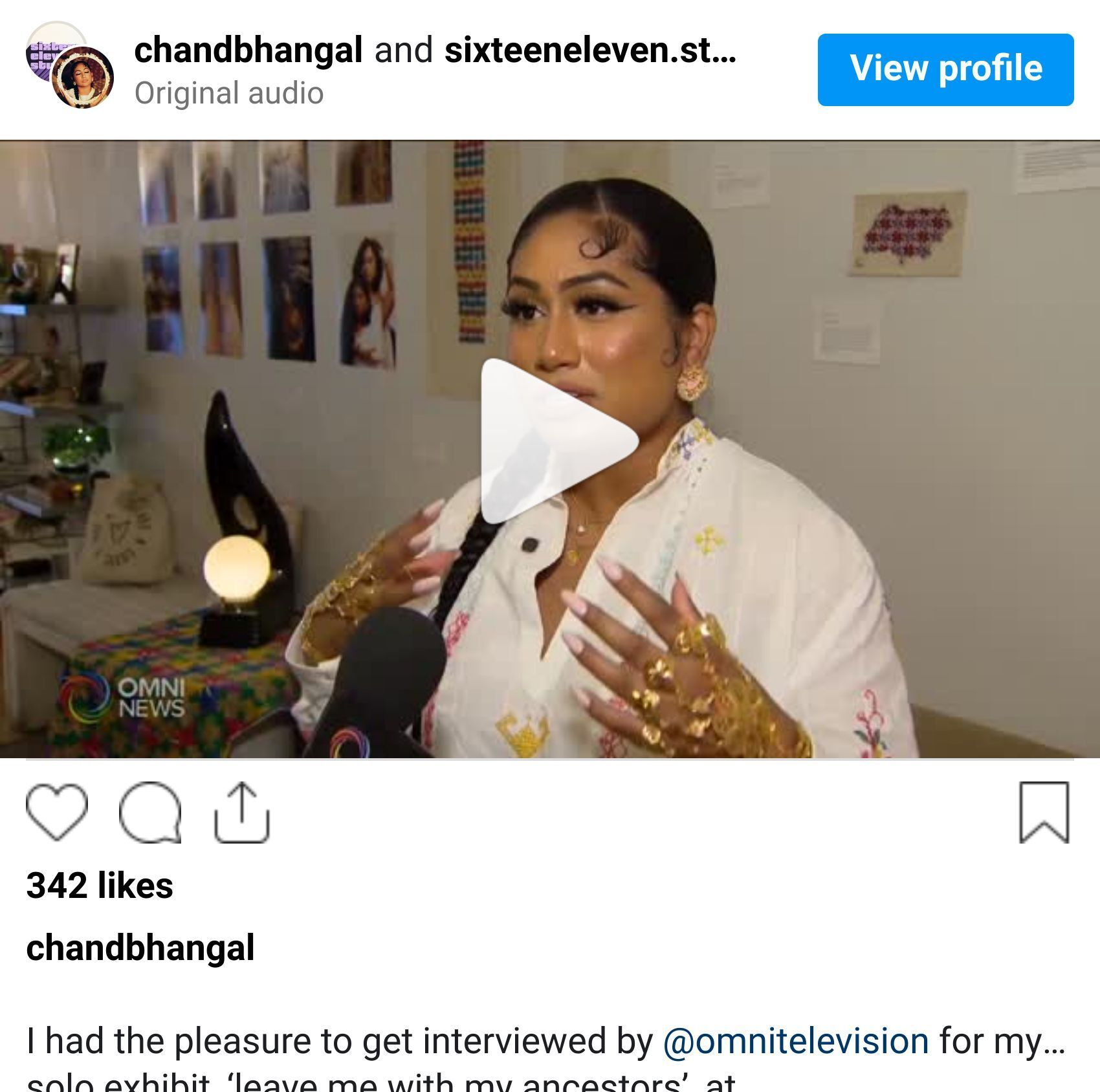
Solo textile exhibit with Chand Bhangal
Any event ideas or cities we should visit in 2026? Let us know and we’ll see you in the new year!
— Roohi Sahajpal
Issue 91
Follow us on Instagram, Twitter and Facebook
[email protected]