- Didihood
- Posts
- Didihood ~ Issue 97

How are we already halfway through 2026? We hope you are all doing amazing and we appreciate your continued support for Didihood! We just wrapped another year of The Didi Creative Fund! We received over 100 applications and almost $5000 in donations, which let us grant 8 Didis with $500 this year to work on their creative projects!
Congratulations to the recipients and we can’t wait to do this again next year!

Meet the Didi
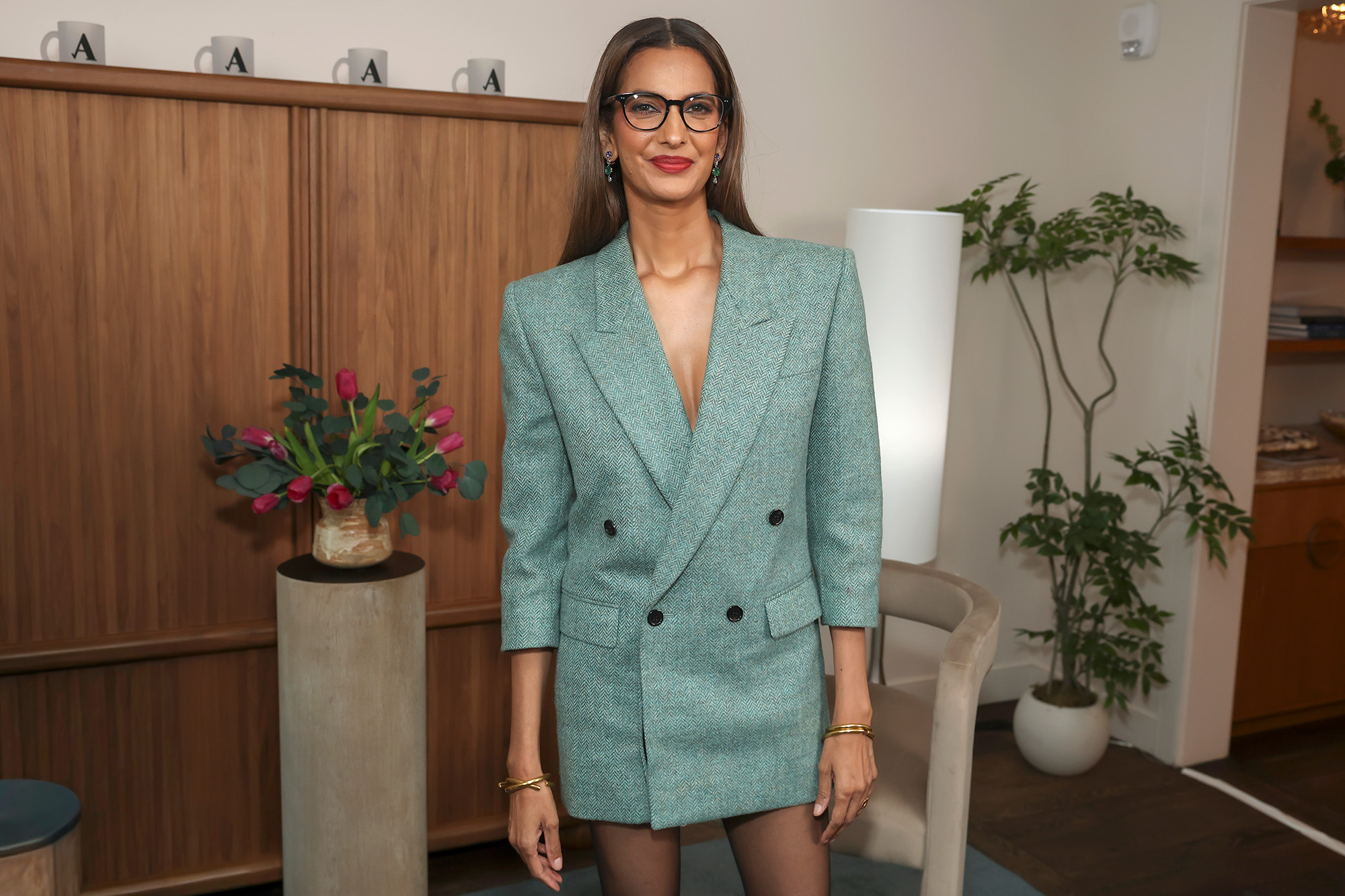
This month we’re chatting with Sima Qadeer! Sima Qadeer is a Toronto-based author whose writing explores identity, belonging, and empowerment. Her debut story collection, Brown Girls, Grown Up, shines a light on the nuances of modern womanhood with grace, honesty, and charm. The stories in Qadeer’s debut collection delve into the subtleties and blatant struggles of navigating shifting identities as one matures, into the joys and challenges of intimacy and aging, and into the changing tides of motherhood. She previously worked in public policy and administration with the Canadian International Development Agency and Global Affairs Canada.

PHOTO BY: Matthew Bennett
When did you start writing? Is it something that you've always wanted to do?
Yes, absolutely. In many respects, writing has been the one constant and certainty throughout my life. I had the privilege of growing up in a household full of books. My father was a huge reader. He loved everything from the early Urdu poets to political biographies. We had a room in our home that was full of books, and I would spend hours just randomly pulling out a book from the shelf and reading it.
I learned about the assassination of JFK in that library, and what it meant to be a liberal in Canada. I think the transition from becoming a reader to becoming a writer is probably a very natural one for many writers. I wrote my first short story when I was six years old. It was about a detective investigating animals being stolen from a zoo. My love of the written word only grew from there.
Writing has always felt empowering, freeing, and comforting to me. Through creating stories and seeing the world through the eyes of my characters, I’ve been able to better understand both myself and the world around me. On the page, there is a kind of safety. There’s safety in knowing it’s okay to not be okay. It’s okay to be the weird one, the unlikeable one, the outcast. In fiction, those are often the characters we are most drawn to.
In real life, though, we perform in many ways that mask our quirks and contradictions, or anything that we think may be strange. Writing allows me to take that mask off. It allows me to ask questions and explore thoughts that I might not otherwise say out loud. And that, to me, is one of the most freeing experiences imaginable.
Your debut short story collection, Brown Girls, Grown Up, is releasing in June! Tell us about how the book came together.
Honestly, through sheer grit and perseverance. I didn’t write this book until my mid-40s. It’s my first book and it took me a very long time to get here.
Like in many South Asian families, becoming a writer professionally really wasn’t considered a viable option. So I followed a different career and education path from anything related to literary pursuits. I worked in international development, which in many ways aligned with the same instincts that writing does for me. There was always something deeply meaningful to me about wanting to tell the stories of people who have been excluded or marginalized.
Then came my 40s. I wish I could say I was one of those people who could work full time, raise children, and write a novel on the side, but I wasn’t. I hadn’t stopped writing. I was still doing it, but I was doing it without focus or intention.
At a critical point in my life, I had to decide whether I wanted to continue on the career path I had spent years building or leave it behind and fully commit to writing. It felt like if I didn’t make the decision then, I never would. Time suddenly felt like it was moving very quickly.
With the support of my family, I left work and started writing seriously and with intention. I sat in my basement listening to music and the characters and stories unfolded. I had a playlist, the same one that I listened to for over two years, and through those songs the characters, emotions, and scenes that became Brown Girls, Grown Up slowly came into being.
I wanted to explore themes and issues and challenges that I had heard many women discuss privately, but there was still very little discussion or representation of these issues out in the world. I wanted stories that showed that middle-aged, racialized, immigrant Canadian women and their experiences are just as valid and real as anyone else’s.
Leaving my career was one of the biggest risks I’ve ever taken and I still don’t know exactly where this path will lead, but I can honestly say it’s probably one of the better decisions I’ve made. I feel so much more in my element and that is a great feeling.
Why do you think it’s important for women, especially South Asian women, to be able to share their stories?
Because our stories deserve to be told. Too often, our lives are either invisible or represented in ways that feel deeply skewed. South Asian women, especially women over 40, tend to disappear from mainstream narratives altogether. And that’s unfortunate because our lives are rich, layered, heartbreaking, complicated, and inspiring.
As women, mothers, daughters, wives, and friends, we carry so many identities and experiences. We’ve lived through things, reckoned with them, survived them, and come out the other side with stories that matter.
Several years ago, I had the pleasure of meeting Uzma Jalaluddin, the author of Ayesha at Last. She was speaking on a panel, and afterward I introduced myself to her. At the time, I was struggling with the decision of whether to leave my career and pursue writing seriously.
I told her that fear was holding me back. She told me something along the lines of, “There is so much interest in our stories being told, so just tell them.”
That stayed with me. Writing can be an act of ownership over your identity. There’s something incredibly empowering about that. And just as Uzma encouraged me, I would say the same to others: write, because our stories matter.

What do you hope your readers will take away from this book?
I hope women who are at a similar stage of life to me see something of themselves in these stories. With so many titles and responsibilities, I think many of us lose touch with who we are underneath them. Sometimes we lose touch with what we actually want.
The women in these stories are middle-aged, they are racialized, they are mothers, wives, daughters, sisters, and friends. They want things that women who typically share their profile are not always allowed to want in commonly held narratives. They are contradictory, complicated, thoughtful, and searching. Their desires don’t always align neatly with the roles they’ve been assigned, and that can make life messy.
I hope readers connect with that messiness and understand that it’s okay. The contradictions, the searching, the uncertainty — all of it is part of being human.
Although these stories are told through a very particular lens, I do think the emotions at their core are universal. The characters throughout the collection all share a desire to be seen, heard, valued, and to feel comfortable in their own skin.
Those are deeply human desires, and I think many readers, regardless of background, will recognize parts of themselves in them.
What advice would you have for young readers who want to become writers?
I think you need grit and perseverance, but you also need to find a writing practice that genuinely works for you. There’s endless advice about how to write, how to structure your day, and what being a writer is supposed to look like. But at the end of the day, writing has to feel meaningful and sustainable to you personally.
That practice might involve a certain environment, certain routines, music, quiet, chaos — whatever allows you to enter the mental and emotional space where writing can happen naturally. Because ultimately, writing is a practice. And the advice itself is actually very simple: you have to write.
I would also tell young writers that it is completely normal to feel embarrassed or uncomfortable by your own work sometimes. I still feel that way. Many writers do. There are moments when what you’ve written feels cheesy or awkward or overly vulnerable. But that discomfort is often part of the process.
You have to push through it. If you keep going, you eventually reach the other side of it, and that’s where the real work begins to emerge.
I would also encourage writers to tell their stories the way they understand them. It is not your responsibility to represent all South Asian people or all South Asian women. The diaspora is far too vast and varied for any one person to capture in its entirety.
But don’t be scared to tell your slice of it. We all have our own experiences as immigrants, as children of immigrants, whatever it may be. And all of us are allowed to share those experiences, even when they contradict each other.
There are many different ways to exist within a hyphenated identity. In my case, as a Pakistani-Canadian, Muslim, middle-aged woman, who is a wife and a mother, all of those experiences deserve space.
So be bold. Be different. Your voice matters.
What we’re reading:

Thanks for reading, we’ll see you in July!
— Roohi Sahajpal
Issue 97
Follow us on Instagram, Twitter and Facebook
[email protected]